
 pyRPC
pyRPCA dashboard that renders five widgets issues five RPC calls. Five HTTP round trips, five connection setups, five chances for one slow request to dominate the waterfall. v0.13.0 ships batching as a transport optimization, and the phrase is chosen carefully, because the interesting decisions are all about what batching is not.
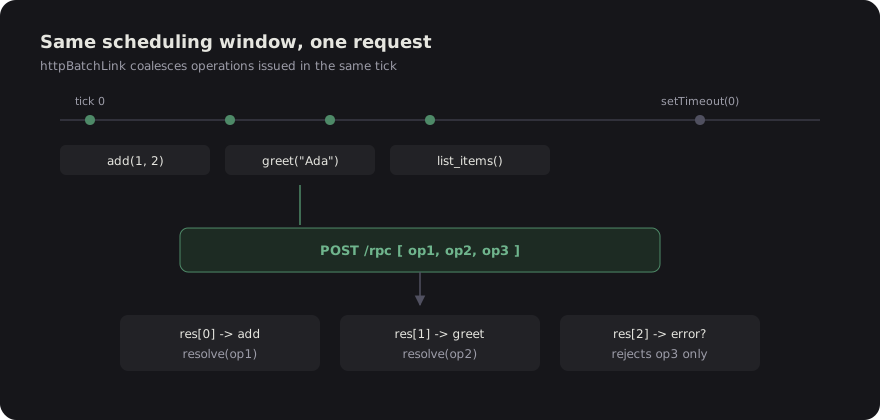
Client: collect the window, flush it
httpBatchLink exploits a JavaScript scheduling fact: synchronous code that issues several calls runs inside one event-loop turn. Operations arriving in that window are queued; the first enqueue schedules a setTimeout(0) flush:
return new Promise<OperationResult>((resolve, reject) => {
 current.pending.push({ operation, resolve, reject });

 if (current.pending.length >= current.maxItems) {
 void flush(current); // size cap reached
 return;
 }
 if (current.timer === null) {
 current.timer = setTimeout(() => void flush(current), 0);
 }
});
The result: calls in the same tick share one POST carrying a JSON array; each caller keeps its own promise. A missing slot in the response array rejects that operation with a clear error instead of hanging.
Server: dispatch sequentially, respond in order
The interpreter accepts either shape. A dict dispatches exactly as before; a list iterates through the normal single-operation path and collects responses positionally:
MAX_BATCH_SIZE = 100

if isinstance(payload, list):
 if len(payload) > MAX_BATCH_SIZE:
 return [invalid_request(
 f"Batch too large: {len(payload)} operations (max {MAX_BATCH_SIZE})"
 )]
return [await handle_single(op, router) for op in payload]- In order, so index mapping stays trivial on both sides.
- Capped at 100, so an accidental
Promise.allover ten thousand rows cannot become one giant request. - Per-operation errors: one failing procedure returns its error object in its slot; siblings are untouched.
What batching deliberately is not
The docstring on httpBatchLink spends more words on semantics than mechanics, and that ratio is the design:
- Not a transaction. Nothing rolls back when operation three fails. Batching shares a socket, not a database scope.
- Not parallel execution. The server dispatches sequentially. Predictable ordering beats speculative concurrency for state-mutating procedures; if you need isolation or parallelism, issue independent requests.
- Not a new procedure kind. No special casing downstream, auth, validation, and introspection see exactly what they saw before, per operation.
The payoff you actually notice
With TanStack Query adapters, a page mounting four queries fires them in one tick, which now means one request. Latency drops from N×RTT toward 1×RTT without any API change: no batch() wrapper, no explicit grouping. You write ordinary calls; the transport notices they are neighbors.
That is the test for transport features: invisible when unneeded, automatic when applicable, honest about limits (the size cap exists server-side precisely because client defaults can be wrong). Batching clears all three bars.